
How Colonie Recent Arrests Work
The Colonie Police Department works out of the Public Safety Center. It sits at 312 Wolf Road in Latham. After an arrest, local processing can end several ways. A person may be released, taken to court, or moved to another department. Others are remanded to the Albany County Correctional Facility. So a Colonie Police arrest does not automatically mean ACCF custody. Colonie counted 85,590 residents in the 2020 Census, per Census QuickFacts. The Police Records Division keeps official reports and arrest records and handles FOIL requests. Start with that division for the arrest event itself. VINE is the separate check for county custody.
A Colonie arrest or booking record only shows that police made an arrest.
Where Colonie Arrests Appear
The Colonie Police Department publishes no daily blotter or searchable arrest roster. For a clear picture of Colonie recent arrests, start with official custody records, then turn to clearly labeled news and private sources.
| Channel | Photo? | Use |
|---|---|---|
| Colonie Police Records | Request separately | Official arrest report and maintained records |
| Albany Corrections/VINE | Not established | Official county custody when remanded |
| Spotlight weekly blotter | Not guaranteed | Police-source, selective local reporting |
| Times Union | Varies | Selective Capital Region case coverage |
| RecentlyBooked Albany | Yes | Unofficial countywide index; verify all entries |
When a Colonie arrestee is held at ACCF, check the Albany County Corrections page.
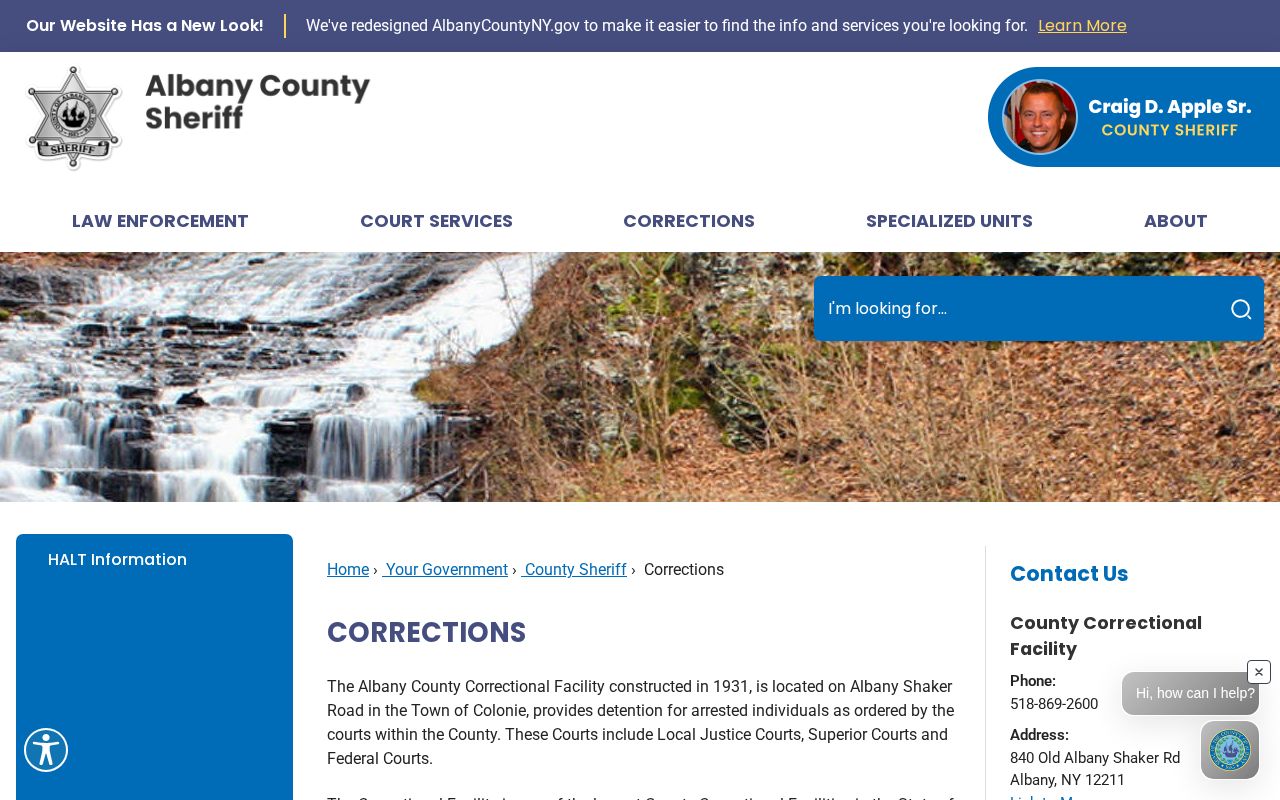
The county page is shown here because Colonie Police offer no equivalent online record. It tracks where arrestees are held, not the arrest itself.
Find Someone Arrested in Colonie
Separate the local event from present custody and later court action.
- Confirm the full name, date, and that Colonie Police made the arrest.
- Check official Colonie Police public information for a dated release.
- Use Albany County Corrections' VINE route if a county remand is reported.
- Contact the Records Division when no public item exists.
- File a focused FOIL request for the report and list any photograph separately.
- Use the correct town or county court for disposition.
The Albany County recent-arrests guide walks through the custody, booking photo, and FOIL layers for the county. When VINE returns nothing, the person may have been released, moved, or never booked there at all.
Colonie Police Arrest Records
The Records Division at Colonie Police handles data entry, keeps official reports and arrest records, and processes FOIL requests, according to the department's 2023 annual report. Its home base is the Public Safety Center. For non-emergency calls, the number is 518-783-2744. The department sets no fixed response time and publishes no photo-specific fee.
- Describe the requested arrest report by name, date, location, and incident number if known.
- Ask the Records Division which record is maintained by the town.
- List an existing arrest or booking photograph as its own item.
- Use FOIL when directed and request electronic delivery plus a fee estimate.
- Keep the agency response if material is withheld, redacted, or held elsewhere.
If the Albany County Correctional Facility holds a separate commitment record or booking photograph for Colonie, expect to file a county-level request too. Fees and timelines differ by agency, so Colonie requests should not carry Guilderland's accident-report pricing or Albany City's response estimate.
Colonie Arrest Coverage and News
Local news fills in what no live Colonie custody list provides. Spotlight News's Colonie Area Weekly Police Blotter is the strongest recurring source. It draws on police reports. Readers get charges, warrant pickups, department transfers, and one county-jail hold before arraignment. Coverage is periodic, though, and selective. Times Union and regional TV stations report individual Colonie arrests when a case draws attention, but a story's photo says nothing about current custody. RecentlyBooked sometimes lists county records tied to Colonie, yet it remains an unofficial secondary index with privately controlled timing.
Colonie's Weekly Blotter Pattern
The weekly format earns its keep in a couple of ways. Each story ties an event to a police report and may say whether the person was held before arraignment or moved on a warrant. It also runs on a slower clock than VINE. A blotter piece can land days after a release, or after a transfer to another custodian.
When you read one, jot down the article date, the stated arrest date, and the agency involved. Note any court context too. Keep in mind the blotter never covers every Colonie arrest, and a name in print does not mean that person is still at the county jail.
From Colonie Arrest to ACCF
A Colonie Police arrest can follow several paths. It might stay in local processing, end in release, transfer on a warrant, or move to ACCF after remand. Each stop keeps its own paperwork. The arrest report stays with the agency; the county custody event belongs to ACCF and VINE; a court record carries the disposition. That chain clears up seeming conflicts. A news story can truthfully report a person sent to county jail before arraignment while a VINE check today returns nothing current, because each describes a different moment. So preserve timestamps and check any transfer language.
Colonie Mugshots and Photo Requests
Colonie Police publish no official mugshot gallery. If you need an image, ask the department one thing. Did it create a booking photo from the arrest? Does the department still maintain that photo? Photos made during ACCF intake sit with the county instead. New York privacy, sealing, investigative, and fair-trial rules can justify redaction. They can also justify denial of a photo request. A privately circulated picture proves nothing about what the official custodian releases today.
After a Colonie Arrest
A local court record shows arraignment, release conditions, and the next appearance. Felony matters may shift to Albany County Court. The route turns on the charge and jurisdiction. So a booking entry alone never tells the whole court story. Track amendments, dismissal, plea, acquittal, conviction, sentence, or sealing through the docket itself. A weekly blotter may sketch early court context. It cannot replace that record. Keep the disposition date separate from both the arrest date and the publication date.
Verify Colonie Arrest Details
Details go stale fast. Names repeat, and custody labels lag. So match the report number, the agency, the event date, and the court reference instead of trusting a face or a familiar name. If a private page posts something wrong about a Colonie arrest, ask for a correction and hand over the official record. RecentlyBooked runs a countywide index with booking photos. Its timing and completeness stay privately controlled. Mugshots.com's Albany collection is historical, mostly spanning 2012 through 2019, which makes it thin for current Colonie arrests. Save the URL and your access date too. Custody shifts over time, so an old article can describe the arrest correctly yet be wrong about where that person sits today.
No Colonie Public Arrest Roster Located
Colonie publishes no town arrest blotter. That gap matters. The path forward is the Records Division, not some invented Colonie jail roster. Colonie does not run the Albany County Correctional Facility, and town arrests follow more than one custody route.
Use VINE only when county custody fits. Police Records covers the arrest event itself. Court records settle the outcome. That split survives even when a news item or social post vanishes, because each request targets the office that actually holds the record. For a narrow request, give the full name, the approximate arrest date, an incident number if you have one, and the type of record you want. Do not ask the town to build a new list. Ask whether records can arrive electronically, and request a fee estimate before anything is copied.
One more wrinkle. If the department says a booking photo belongs to ACCF, send that single item to Albany County. Don't assume the rest of the report moved too. When an investigation or a sealing rule blocks access, keep the written response and use the formal review process. Skip the temptation to fill gaps from private pages. The two-source pattern holds up: Police Records documents the local arrest, VINE tracks any county custody, and Spotlight adds dated narrative color as a secondary layer.